
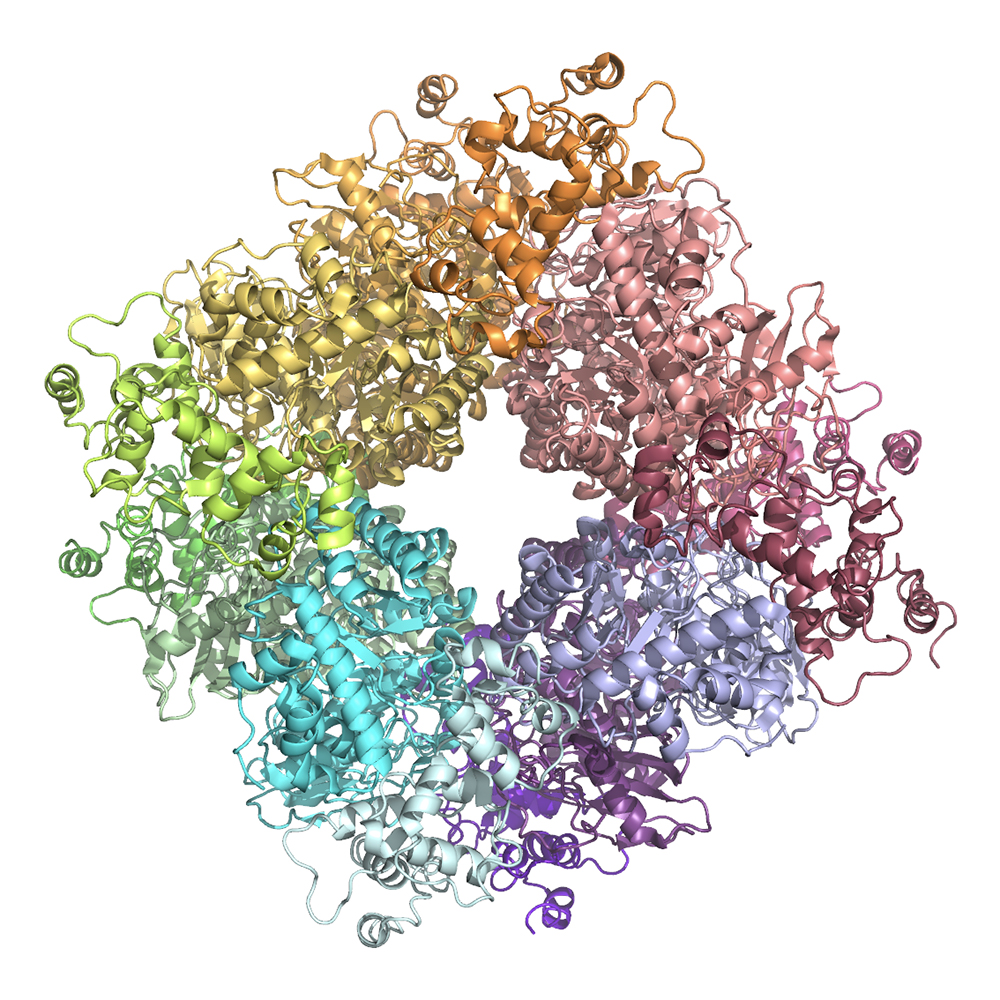
Generativity: Creating Protein Variants with Tailored Properties
Generativity refers to StructureGPT’s ability to generate novel protein sequences that maintain the overall structure of the original protein while introducing variations at the sequence level. This allows us to create protein variants with improved properties—such as enhanced stability, solubility, or reduced aggregation—without altering the protein’s core function.
In industrial biotechnology, we can generate variants of enzymes used in chemical processes, making them more stable under extreme conditions such as high temperatures or non-aqueous solvents, leading to more efficient and cost-effective production methods.
In the pharmaceutical industry, we can create variants of therapeutic proteins that retain their biological activity but exhibit better solubility or reduced immunogenicity, improving drug formulations for patients.
Inpainting: Reconstructing Proteins and Designing from Scratch
Inpainting is a more advanced capability that allows StructureGPT to “fill in” or repair missing parts of a protein structure, generating a new sequence that restores the absent regions while keeping the overall structure coherent. This functionality is crucial for more innovative protein design tasks where parts of the protein must be redesigned or even generated from scratch.
In biocatalysis, inpainting enables us to redesign active sites in enzymes, allowing for new reaction pathways or improved substrate specificity. This could revolutionize the production of biofuels, such as biohydrogen or hydrocarbons, by enhancing microbial metabolic pathways for higher yield and sustainability.
In medical biotechnology, we could design entirely new therapeutic proteins. For instance, modifying the T-cell receptor in adaptive immunotherapy so that it better recognizes and attacks cancer cells, offering new avenues in personalized cancer treatment.
Environmental applications include designing biosensors capable of detecting toxic compounds in water by redesigning protein binding sites to specifically recognize and signal the presence of contaminants.
How StructureGPT Stands Out
In the growing landscape of AI-driven protein design, several models focus on specific tasks—such as generating sequences, predicting protein structures, or optimizing certain properties. However, StructureGPT combines the strengths of models used in natural language processing (NLP) and computer vision, making it uniquely versatile.
Unlike models focused solely on generating sequences, StructureGPT integrates structure-based design, allowing it to modify existing proteins or generate entirely new sequences based on structural information, not just sequence data.
While tools like AlphaFold and RoseTTAFold excel at predicting protein structures from sequences, StructureGPT goes further by generating sequences from structure. Its ability to reconstruct missing regions (inpainting) or generate variants (generativity) makes it a more comprehensive tool for protein engineering.
The XSeq system enhances StructureGPT by predicting multiple properties, such as stability, solubility, or thermal resistance, ensuring that the generated proteins are not only novel but also practical for real-world applications.
Overcoming Current Limitations and Future Directions
While StructureGPT demonstrates remarkable capabilities, its inpainting functionality is most effective on localized structural changes. Large-scale redesigns or deletions are still a challenge, and ongoing development is focused on improving this aspect. Moreover, as we develop and validate more XSeq model we anticipate even more accurate property predictions and enhanced protein designs.
As we continue to refine and expand the platform, the potential applications of StructureGPT and its capabilities will only grow. From improving industrial enzyme efficiency to designing next-generation therapeutics, the future of protein design looks promising with AI at its core.